
Tips for traveling with cash between the US and Mexico

If you're packing for a trip south of the border, you may be wondering how much cash you can carry on a plane. The short answer: there is no legal maximum, but once you go above a certain amount, you must report it to customs. Knowing where that line is can save you from delays, fines or even losing the money.
Before your next Volaris international flight, we recommend you read through this article, where we explain the reporting rules on both sides of the border, what counts as currency and how to carry money more safely.

Carry what you want, declare what you must
Both the United States and Mexico allow travelers to bring any amount of money. What the law requires is transparency: amounts above the reporting threshold must be declared.
United States: if you carry more than US $10,000 in currency or monetary instruments when entering or leaving the country, you must report it to U.S. Customs and Border Protection (CBP).
Mexico: if you carry more than the equivalent of US $10,000 when entering or leaving the country, you must declare it to Mexican customs.
In other words, the cash limit when flying is really a reporting threshold, not a cap. Carrying more is legal; failing to report it is not. Always confirm the current rules on the official CBP money guidance and with Mexico's customs agency before you go.
What counts as currency?
The threshold applies to the combined value of everything you're carrying, not just bills. That includes:
U.S. dollars and foreign currency, including Mexican pesos.
Coins.
Traveler's checks.
Money orders and cashier's checks.
Other negotiable instruments that can be transferred by delivery.
An example: If you have US $7,000 in cash and the equivalent of US $4,000 in pesos, your total is above the threshold and must be reported.
Families and groups
For families traveling together, CBP looks at the total amount the group is carrying. Splitting money among companions to stay under the threshold can be treated as a separate violation, so the best way to proceed is to declare the full amount.
Flying across the border with cash
Declaring cash at customs is usually quick when your paperwork is ready. It mostly involves answering a few questions and letting officers verify the total.
On international flights between the U.S. and Mexico, you may need to report your cash twice: once when you leave one country, and again when you arrive at your destination.
Each country has its own forms:
Leaving or entering the United States
File FinCEN Form 105 (Report of International Transportation of Currency or Monetary Instruments). CBP recommends filing it online before your trip, or you can ask a CBP officer for a paper copy.
When arriving in the U.S., also mark on your customs declaration that you are carrying more than US $10,000.
Be ready for the officer to count the money and verify your form.
Leaving or entering Mexico
When arriving, indicate the amount on the customs declaration for passengers coming from abroad.
When departing, use the cash declaration for outgoing passengers.
For amounts above the threshold, also complete the official form for declaring cash and receivables, available from customs staff or Mexico's customs agency website.

What happens if you don't declare?
Skipping the declaration can turn a simple trip into a serious problem. In the United States, penalties for failing to report may include seizure of all the money, fines and even criminal charges. In Mexico, failing to declare is also an offense, and the excess amount may be subject to fines or seizure.
Even if the money comes from a completely legitimate source, the requirement still applies.
The safest approach is always to declare.
Carrying cash through the airport
Carrying cash through the airport is not a problem in itself. TSA screening focuses on security threats, not on how much money you have. Still, large amounts can draw questions, so keep it organized and be ready to explain its purpose if asked.
A few tips:
Keep cash in your carry-on or on your person, never in checked luggage.
Store it in one place, like a travel wallet, so it's easy to show if requested.
Keep receipts or bank withdrawal slips if you're carrying a large sum.
Don't announce it, and avoid counting money in public areas.
Frequently asked questions
How much money can you take to Mexico for a typical trip?
You can carry any amount, but sums above US $10,000 must be reported when crossing the border.
Do I need to declare cash when flying to Mexico?
Yes, if the total value of your cash and monetary instruments is above the equivalent of US $10,000. The currency declaration Mexico requires is part of the customs process on arrival.
Can I carry cash in my carry-on?
Yes, and it's the safest place for it. Avoid packing money in checked bags.
Before you go: a short cash checklist
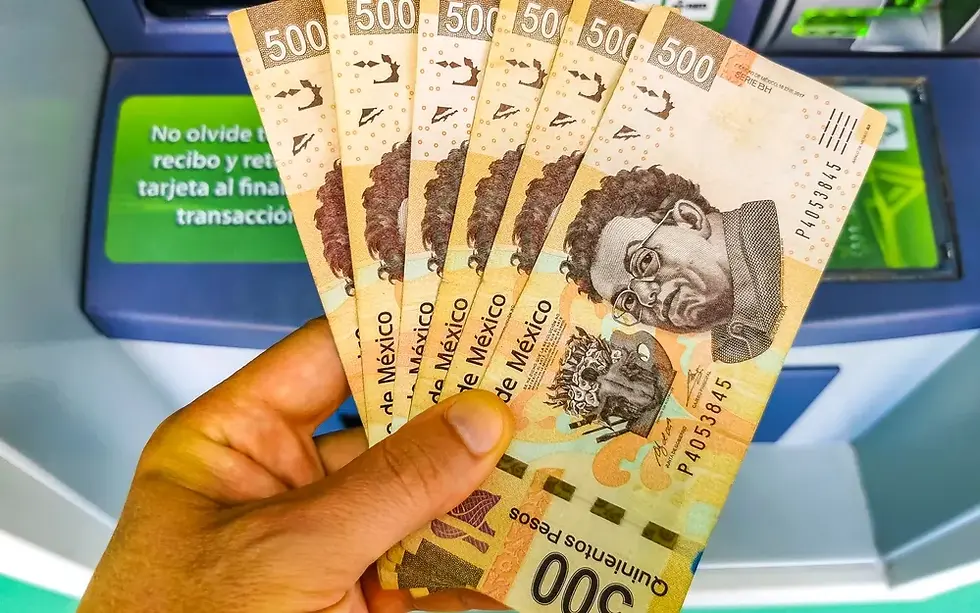
Mexico is widely card-friendly in cities and tourist areas, but cash is still useful for markets, taxis, tips and small businesses.
Decide how much cash you really need for the first days of your trip. You can carry a mix of pesos, plus debit and credit cards.
Notify your bank before traveling to avoid blocked cards.
Keep the cash in one place that stays with you at all times.
Know where the customs declaration desks are at your arrival airport.
File any required forms ahead of time.
Compare exchange options before converting large amounts at the airport.
Booking your Volaris flight early leaves time to file the required forms online and plan how much cash you'll actually need. Check out our flight deals for your next trip south of the border.
The answer to how much cash you can carry on a plane is simple once you know the rules: carry what you need, declare what you must and let Volaris get you to Mexico with more of your budget left for the trip itself.








Comments