
What is Aguascalientes known for? Discover the thrill of this Mexican destination

Each year, Aguascalientes hosts the San Marcos Fair, the largest fair celebrated in Mexico and one of the largest in North America.

But what is Aguascalientes known for beyond its famous festival? From thermal springs that gave the city its name to world-class museums and a thriving automotive industry, this hidden gem offers travelers an authentic Mexican experience without the crowds found in more touristy destinations.
The city of Aguascalientes is called "the heart" of Mexico because it lies in the middle of the country, making it perfectly positioned for exploring central Mexico. Volaris’ flights to Aguascalientes connect this destination with major cities across North America, offering convenient access to one of Mexico's most underrated cultural hubs.
The legendary San Marcos Fair that draws millions
The San Marcos Fair takes place from mid-April to early May and attracts almost 7 million visitors to Aguascalientes every year.
This three-week celebration transforms the entire city into a festival atmosphere, featuring commercial and industrial exhibitions, bullfights, concerts, rodeos, and a specially licensed casino where visitors can try their luck.
The celebration was originally held in the San Marcos church, neighborhood, and its magnificent neoclassical garden.
Since then, it has greatly expanded to cover a huge area of exposition spaces, bullrings, nightclubs, theaters, performance stages, theme parks, hotels, convention centers, and other attractions.
The fair has become so significant that local schools and some businesses close during portions of the event, allowing residents to fully participate in this cherished tradition.
Hot Springs that inspired a city's name
The name originates from the Spanish words "aguas calientes," meaning "hot waters," part of the original name Villa de Nuestra Señora de la Asunción de las Aguas Calientes.
Why is Aguascalientes called that? The answer lies beneath the city's surface, where thermal features are still in demand at the city's numerous spas and even exploited for domestic use.
Located in downtown Aguascalientes, the Ojocaliente hot springs offer pure spring waters at temperatures between 38°C and 40°C. These historic thermal baths provide visitors with a unique opportunity to experience the natural healing waters that have drawn people to this region for centuries.
Colonial architecture and historic landmarks
Aguascalientes stands out for its beautifully preserved historic center, where centuries of architecture reveal the city’s colonial roots and cultural legacy. Walking through downtown is one of the best ways to understand the heritage behind this central Mexican destination.
Historic landmarks to visit in Aguascalientes
Government Palace: a striking Baroque building dating back to 1664, famous for its red volcanic stone and long arcade of arches.
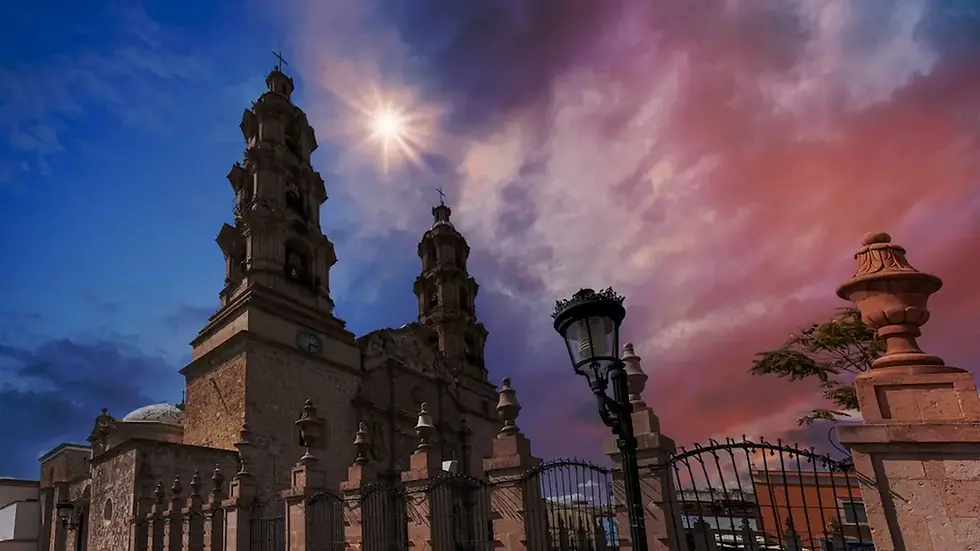
Aguascalientes Cathedral: one of the city’s most important religious landmarks, with origins going back to 1575.
Barrio del Encino: one of the oldest and most traditional neighborhoods in the area, known for its historical identity and architectural character.
Why the historic center is worth exploring
It preserves the atmosphere of Spanish colonial Mexico.
It offers a mix of religious, civic, and neighborhood landmarks in one walkable area.
It helps visitors connect with the city beyond its festivals and modern industry.
This part of the city is ideal for travelers interested in architecture, local history, and cultural immersion.

Birthplace of iconic Mexican art
The most famous museum is the one dedicated to José Guadalupe Posada, a man who was born and lived in Aguascalientes and who is credited as the "founder of Modern Mexican art." The museum showcases the work of the printmaker and lithographer who first created La Catrina in the early 20th century.
His creations are celebrated in grand style during the annual Festival de las Calaveras, which takes place October 27 through November 2.
La Catrina, that elegant skeleton figure now synonymous with Day of the Dead celebrations throughout Mexico, originated from Posada's creative genius right here in Aguascalientes. Visitors can explore his extensive collection of prints, engravings, and lithographs that captured the social and political climate of revolutionary Mexico.
Safety and quality of life: Is Aguascalientes safe?
For many travelers, safety is a key part of choosing a destination, and Aguascalientes is widely recognized as one of the most comfortable cities in Mexico for visitors. Its orderly urban layout, welcoming atmosphere, and strong sense of community make it especially appealing for relaxed travel.
What makes Aguascalientes appealing to travelers
A reputation for being one of the safest cities in Mexico
A walkable city center with a strong local character
Clean streets and a calm urban environment
A welcoming atmosphere for families, solo travelers, and couples.
What you can expect during your visit
Easy access to cultural attractions, museums, and parks
A peaceful setting compared with larger, more hectic cities
A local lifestyle shaped by hospitality and civic pride.
Aguascalientes offers a travel experience that feels approachable, manageable, and authentic, especially for visitors looking to explore Mexican culture in a more relaxed setting.

A cultural escape at the heart of Mexico
Aguascalientes is a destination that rewards curiosity with history, tradition, art, and a slower, more welcoming rhythm of travel. From thermal baths and colonial landmarks to museums and one of the country’s most iconic fairs, the city offers a memorable way to experience central Mexico from a different perspective.
With Volaris and its convenient flights to Mexico, reaching Aguascalientes is a practical way to begin exploring a destination that feels authentic and easy to enjoy. Its central location and strong air connectivity make it a smart choice for travelers looking to discover more of the country.
So, what is aguascalientes known for? It is known for celebrating tradition on a grand scale, preserving its colonial heritage, honoring iconic Mexican art, and welcoming visitors with a sense of calm that is increasingly hard to find.








Comments